
Women as Tools for War
Conflict is never neutral. It is deeply gendered, meaning that men and women are affected in profoundly different ways. This is because gender norms, roles, and expectations influence how conflict is fought and felt, often reinforcing harmful patterns that sustain cycles of violence and inequality.

Tabitha Chol, a long-standing, highly-effective member of the Concordis team in Abyei, recently shared her concerns around how women are being used to justify violence. Tabitha has worked to build peace for over 25 years across Sudan and South Sudan, and she has started to observe a troubling pattern. She is seeing how women are used as tools for war.
She has noticed how, in many communities, when men call on young men to join armed groups, they invoke a familiar and emotionally charged narrative: “You are fighting for your mother, your wife, your sister. You are fighting to defend your women.” Yet, strikingly, women themselves are rarely asked whether they want to be “defended” in this way.
[Photo: Tabitha Chol sits at the centre of a group of Neur community members and spiritual leaders.]
The notion of “protecting women” has been used to justify war for centuries. Rooted in patriarchal ideas of men as protectors and women as vulnerable dependents, this narrative has long been used as a powerful war propaganda tool. It appeals to men’s sense of duty and honour, encouraging them to fight, while simultaneously reinforcing women’s subordinate position in society.
This logic not only limits women’s freedom and autonomy but also harms men. Equating masculinity with strength, bravery, and a willingness to fight leaves little room for alternative expressions of manhood. Men who choose not to fight may be perceived as weak, denying them the space to exercise personal choice or express fear and vulnerability. In this way, rigid gender norms harm everyone involved.
These unequal gender relations continue to shape beliefs and behaviours in everyday life. In contexts like Sudan and South Sudan, they play a direct role in sustaining conflict. Women are invoked as symbols, but too rarely as decision-makers or agents of change.
Tabitha highlights that in Darfur and other areas, women are often referred to collectively as “our women”. This framing portrays women as a homogenous group, erasing their individuality. It also reinforces the perception that women are passive dependents with limited agency.
At the same time, the narrative that “our women” are threatened by external forces obscures a more complex and uncomfortable reality: sometimes the threats to women come from within their own communities. While armed groups may perpetrate gender-based violence, deeply rooted inequalities can also silence women, restrict their autonomy, and expose them to harm closer to home.
Tabitha recalls a striking example of how these dynamics are embedded in cultural practices. A few years ago, it was common for women from the Misseriya herder community to wear necklaces made of empty bullet casings. These were given to them by male partners or family members, who collected the shells as symbols of the men they had killed. Women wore these necklaces as a way of praising men’s strength and bravery, and of encouraging them during conflict.
Such practices illustrate how gender roles can actively reinforce conflict. Men are expected to be strong fighters and protectors, while women are positioned as passive supporters, encouraging and validating violence, even when they are among its victims.
However, change is possible. Tabitha notes that this practice is beginning to change and is no longer widespread, suggesting that gender inequalities, while deeply entrenched, are not inevitable.
How do we support women to build peace?
Recognising and challenging these dynamics is essential to building lasting peace. It requires creating space for women’s voices, where they are not only heard but can also become leaders in peacebuilding efforts.
Tabitha emphasises the importance of collective power. When women are isolated, they are often afraid to speak out or challenge harmful norms. But when they come together, they draw strength from one another. Through solidarity, they are better able to question the roles imposed on them and to advocate for change within their communities.
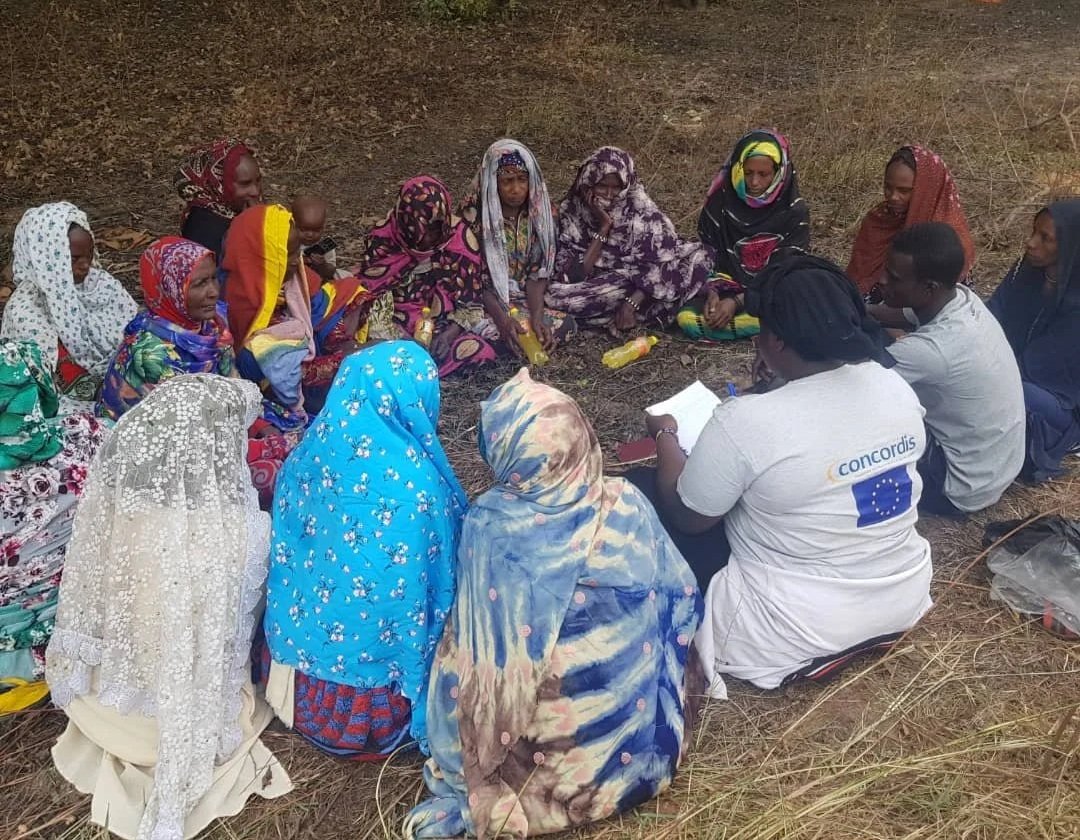
[Photo: Concordis staff consult with women about how they see solutions to local conflicts.]
By bringing women together through trainings, peacebuilding activities, and conferences, Concordis supports women across communities to claim their agency and build this collective strength.
Yet significant barriers remain. Some men fear women’s united strength and what it might achieve. They actively discourage women’s participation in peacebuilding conferences, either restricting their movement or preventing them from attending meetings. Limiting women’s exposure to these spaces is, in effect, a way of limiting their influence.
Even when women are present in peacebuilding spaces, their participation is unequal. Although women now make up around 35% of peace conference participants, they are often marginalised within these spaces. Women sit at the back, their contributions overlooked or dismissed. As Tabitha explains, “It is a constant battle to get men to see the value of what women have to say.”
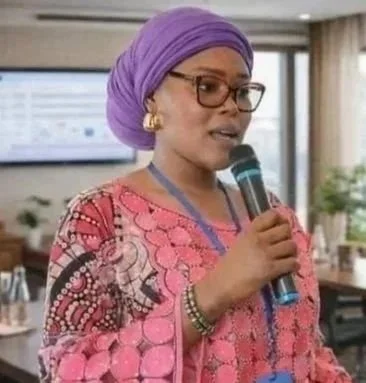
[Photo: A young woman speaks at a peace conference in Abyei.]
For this reason, creating separate, safe spaces for women remains critical. These are spaces where women can speak openly and honestly, without fear of judgment or reprisal.
Through women’s peace conferences, Concordis works to cultivate such spaces. Within them, women share their experiences, exchange ideas, and work collectively to identify solutions to the challenges they face. They build networks of support, strengthen their confidence, and begin to articulate a shared vision for peace.
Perhaps most importantly, these spaces help women develop the courage to raise their voices and challenge harmful norms and practices that reinforce violence. Here, they can reshape their roles from symbols of conflict to agents of peace.