
When a market is more than just a market.
Why does a peacebuilding organisation worry about markets?
Because trade matters when there is no aid. Because a peace that cannot feed a household is a vulnerable peace. Because when people from across conflict divides can buy and sell from each other, depending on the other for their livelihoods, they build relationships that bring mutual benefit and even begin to overcome distrust. It gives them a stake in keeping the peace. That begins to look like a less fragile life.
The border country of Sudan and South Sudan is a fragile place. Multi-generational conflict has created uncertainty, tearing through food systems, trade routes and the delicate texture of ordinary life.
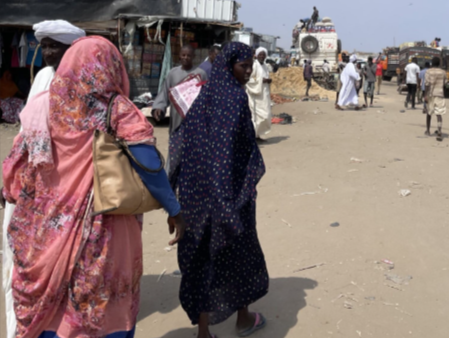
The border country of Sudan and South Sudan is a fragile place. Multi-generational conflict has created uncertainty, tearing through food systems, trade routes and the delicate texture of ordinary life.
It is a place where peace is most definitely a process. Concordis has been part of that peace process for more than twenty years.
And yet in Abyei, the contested territory between Sudan and South Sudan, there is another logic at work.
What if the strongest argument for peace is not made in a meeting room, but in a marketplace?
Daily trade at the Amiet Peace Market
Abyei is claimed by both countries and belongs fully to neither. The Misseriya move their cattle through it and the Ngok Dinka farm it. There is regular violence here, displacements, and seasons of such brittle calm that people learn to read violence in the smallest gestures. But in this contested territory, the Amiet Peace Market has become something marvellous; a daily reason for keeping the guns quiet.
Amiet Market was established in 2016 following two years of dialogue between the different communities, facilitated by Concordis. The Misseriya and Ngok Dinka communities agreed they needed somewhere to trade without violence. It was a practical agreement, born of exhaustion and necessity, and a decision that belonged to the people.
A decade later, Amiet Peace Market has grown into a major trading hub between Sudan and South Sudan. Concordis staff describe a landscape marked by displacement, roadblocks and visible weapons. International organisations have thinned out as funding has contracted.
And something else that does not make the headlines: through a war to the south and now amidst another war in the north, the market has not only survived but expanded. Construction continues. Restaurants and small hotels are appearing. Trade routes displaced by fighting elsewhere are now passing through the Amiet Market.
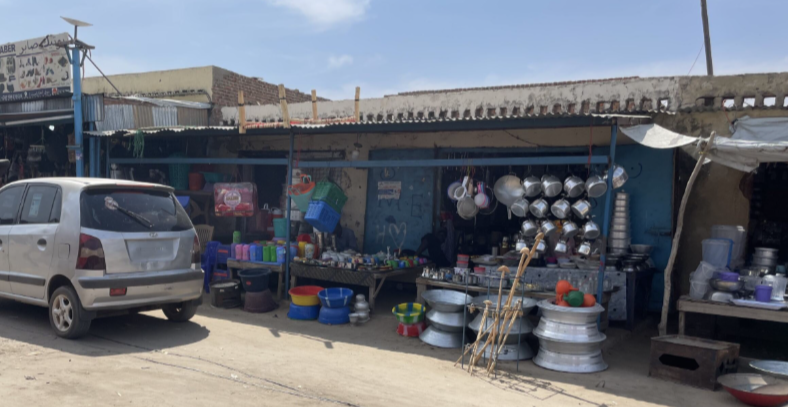
Amiet now supports 3,200 shops and restaurants and 760 wholesale stores, with up to 10,000 people using it each day. There are occasional fires; a devastating one in 2021. Every time the market burns, traders rebuild it quickly, using local materials, all without international support. This is “trade not aid”. Development that is owned and sustained by local people. You do not rebuild something that fast unless it matters deeply to you.
The reason Amiet Peace Market thrives where so much else has failed is that communities share an interest in keeping it alive. When the market closes because of tension, roadblocks or violence, food prices rise, not only in Abyei but far beyond it. That is the measurable cost of conflict.
Part of the secret of Amiet’s success is the organisations created to manage the market peacefully, and address Abyei’s wider issues. Concordis worked with conflicting communities to create and support a Joint Peace Committee. Then came a Joint Community Court. Made up of people from all sides, they manage disputes before they escalate. They are providing a system of justice that everyone accepts.
A decade on, those structures we helped build are still active, growing, respected and used.
In a territory without strong formal institutions, that matters. A market cannot hold strong if every argument over a price or a boundary tips into crisis. Trade needs rules that people trust. It needs a place for grievances to land. It needs the habit of sitting down together before things break.
As a shopkeeper in Amiet Peace Market put it, communities are no longer only waiting for aid. They are opening shops, building businesses, taking trade seriously.
“Waiting for aid” and “building a market” are not the same thing. Aid keeps you alive for a day. Trade begins to change how a place imagines its future.
Concordis applies the same logic elsewhere. In South Darfur, we work in areas where war, old land disputes and inter-ethnic tension have choked off access to roads and markets. The work involves building trust, holding difficult conversations, and helping reopen routes so food can be grown, harvested and moved. We have evidence local peacebuilding helped safeguard the harvest and, crucially, shifted incentives for some young men away from fighting and towards farming.
The pattern repeats. When people have a stake in the economy, they have a stake in keeping the peace.
Tomorrow morning, Amiet Peace Market will open again. The tea fires will be lit. The trucks will arrive or they will not. Disputes will be settled or they will simmer. But the market will be there, because enough people have decided it should be.
That is what sustainability looks like. A row of shops. A woman selling tea. It looks ordinary. And that is the point.
Read the next article to hear about the other Peace Markets we support.