
In June 2026, Concordis International facilitated a cross-border dialogue between herding and farming communities on either side of the Sudan–Central African Republic (CAR) border, building on more than a year of community engagement to renew a reconciliation agreement and set out a clear path to fulfil its commitments.
Um Dafoug, in Sudan, and Am Dafock, in CAR, are neighbouring border towns so closely bound that their communities have long been described as twins. For generations they have been connected by shared ethnic ties, intermarriage, cross-border trade, and the seasonal movement of livestock.
Each dry season, pastoralists from Sudan - most of them cattle herders - move south across the border in search of pasture and water. This seasonal movement, known as transhumance, follows routes used for generations.
Along the way, herders trade livestock and goods for the honey, dried fish, and produce of the farming communities on the Central African side. For most of living memory this relationship has been one of mutual dependence and peaceful coexistence.
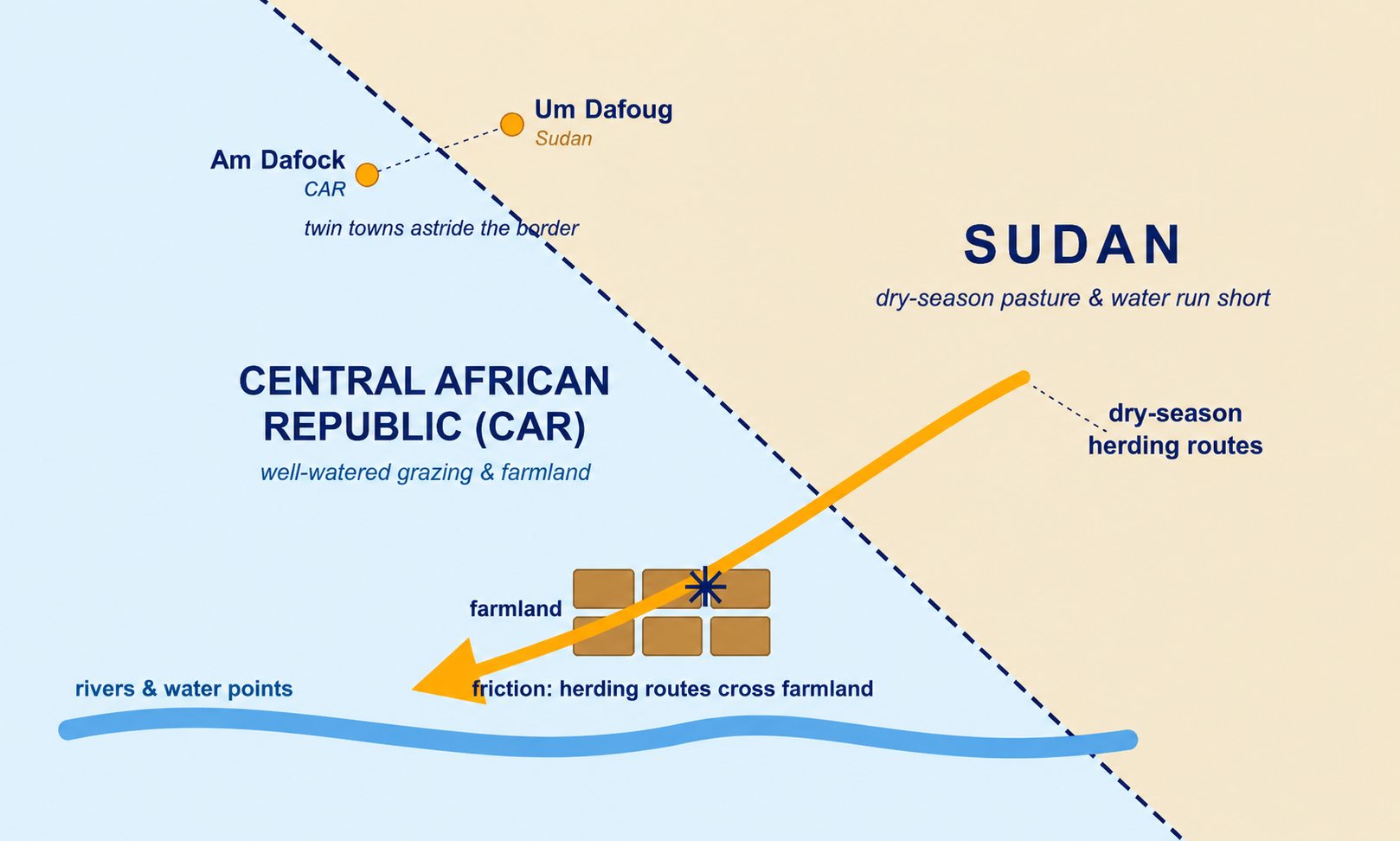
The Sudan–Central African Republic (CAR) borderland*
(Photo: Each dry season, herders move south to well-watered grazing – and meet the communities already farming it.)
*This is an illustrative schematic to show what is happening; it is not geographically accurate.
A co-existence under growing strain
Everyday frictions between herders and farmers have become harder to contain.
Wider insecurity across the region, competition over land and water, and the limited presence of state institutions in remote border areas have all played a part, compounded by Sudan's civil war and continuing conflict in CAR.
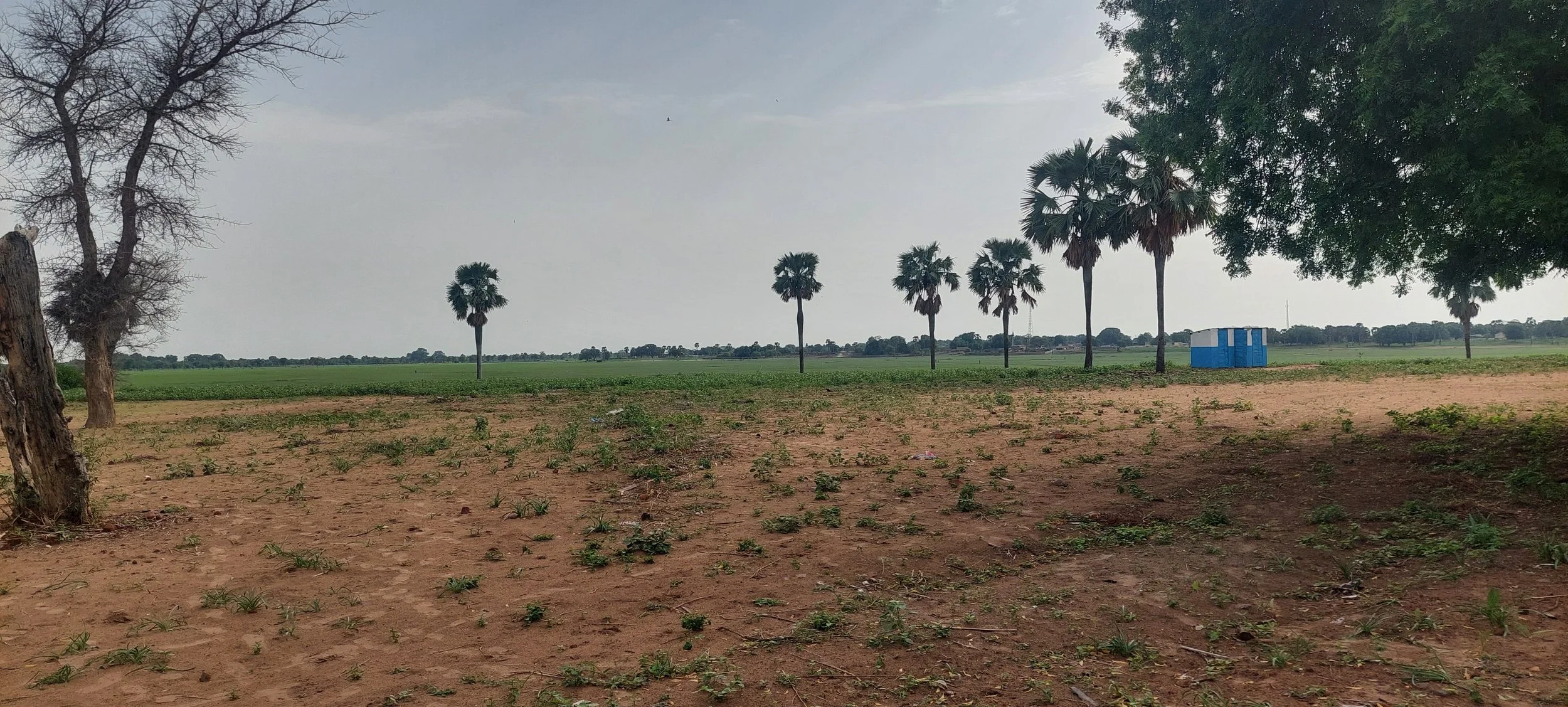
As traditional migratory patterns for livestock have broken down, once-predictable seasonal movements have given way to more uncertain crossings. Disputes over access to grazing land, water, and markets have grown more frequent and harder to resolve.
In 2025, a local dispute escalated into violence, claiming lives on both sides, displacing pastoralist families, and looting livestock and property. The shared border was closed. Which severed ties between the two border communities and cut off herders from the grazing land and water on which their livelihoods depend.
(Photo: The Sudan–Central African Republic border, where a natural water pond known as "Al-Tarda" marks the boundary between the two countries.)
Peace starts with listening
Concordis had already been working to understand these dynamics from the ground up.
We were already looking for ways to build mechanisms to ensure the peaceful management of pastoralist movement, cross-border trade, and stability along this border. But rather than begin with a ready-made solution, our teams first listened.
Through a series of focus-group discussions with herders, farmers, women and young people, the team hear about the grievances, priorities, and proposed solutions of the communities themselves.
One clear message emerged from these conversations: that local peace efforts had collapsed before because they lacked follow-up, enforcement, and the genuine inclusion of all those affected. Any durable agreement would need to be locally owned and properly monitored.
This insight became the foundation for the cross-border dialogue that followed.
Following the June 2025 escalation in conflict, MINUSCA - the United Nations peacekeeping mission in CAR - convened a cross-border dialogue in Am Dafock from 27 to 30 October 2025, bringing together more than 100 representatives from both sides of the border.
Concordis supported the participation of the Sudanese delegation, including community leaders and mediators, ensuring both sides were fully represented.
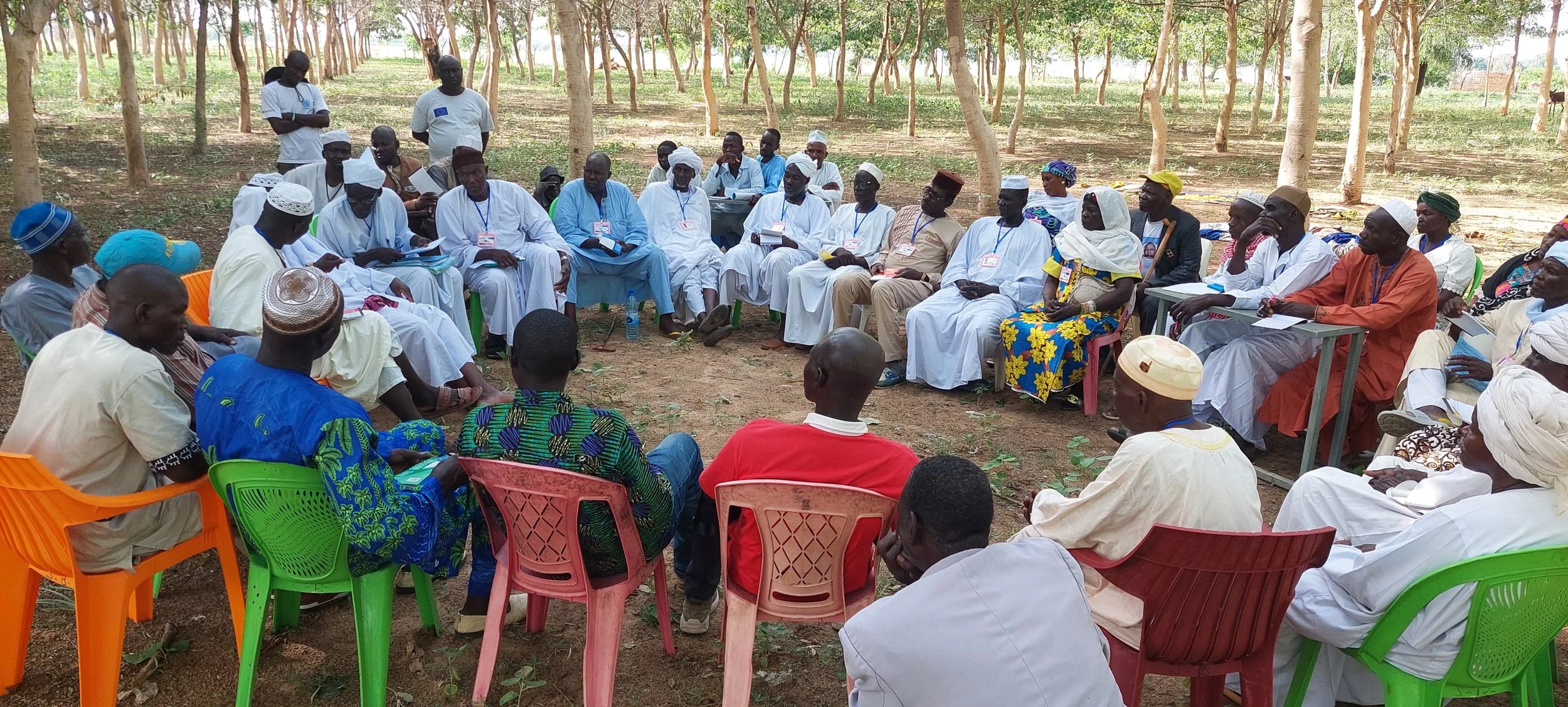
The dialogue resulted in the signing of the Am Dafock Peace Agreement.
The parties committed to respect transhumance corridors, promote peaceful coexistence and free movement, prohibit the illegal possession of weapons, and resolve disputes through locally led mechanisms. A reconciliation agreement committed both sides to pay customary blood compensation (diya) to the families of those killed and to return or compensate for stolen property.
(Photo: Delegates from the Central African farming communities discuss the papers presented during the dialogue and prepare their responses.)
Signing an agreement was only the beginning
The October agreement had opened a path back to peace, but it was one thing to sign it and another to see it through.
Implementation proved slow and uneven: some commitments were met, others were left outstanding long after they were due. With each passing month, the delay strained the fragile trust between the two communities that the agreement had set out to repair.
This stalling, and the risk that it might undo what had been achieved, led the border communities themselves to call for the dialogue to be revived.
Ahead of a new conference, Concordis brought together facilitators from Sudan and CAR, the same team that had guided the dialogue in 2025. The workshop that followed had a clear, threefold purpose: to review the progress made since the October agreement, identify the unresolved issues, and agree practical steps to fulfil the pending commitments and move forward.
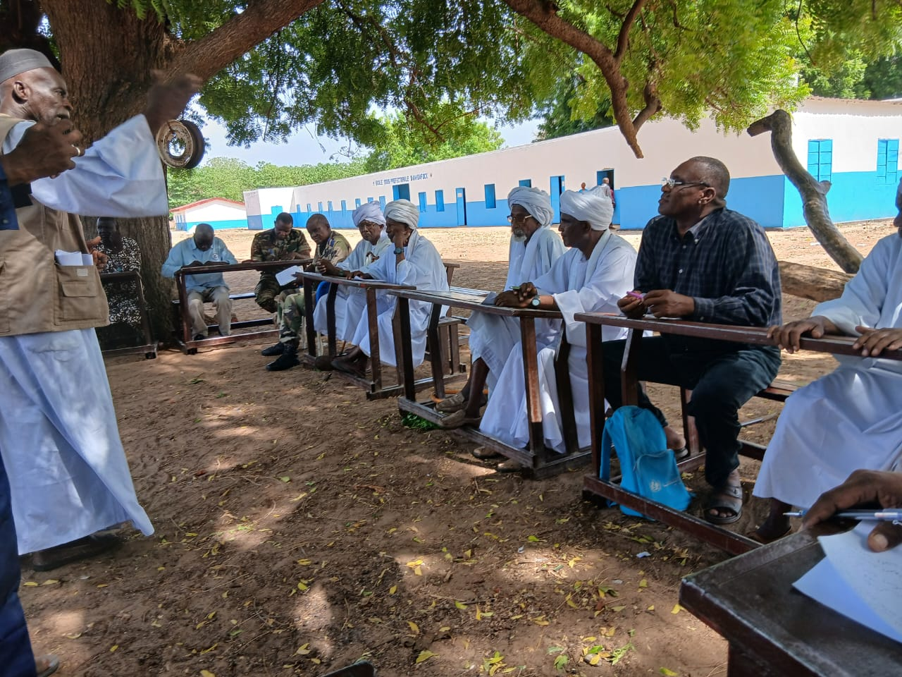
(Photo: The preparatory workshop in Am Dafock provided orientation that paved the way for a smooth cross-border dialogue. In the photo, the head of the Advisory Group of Vakaga addresses participants from both sides of the border.)
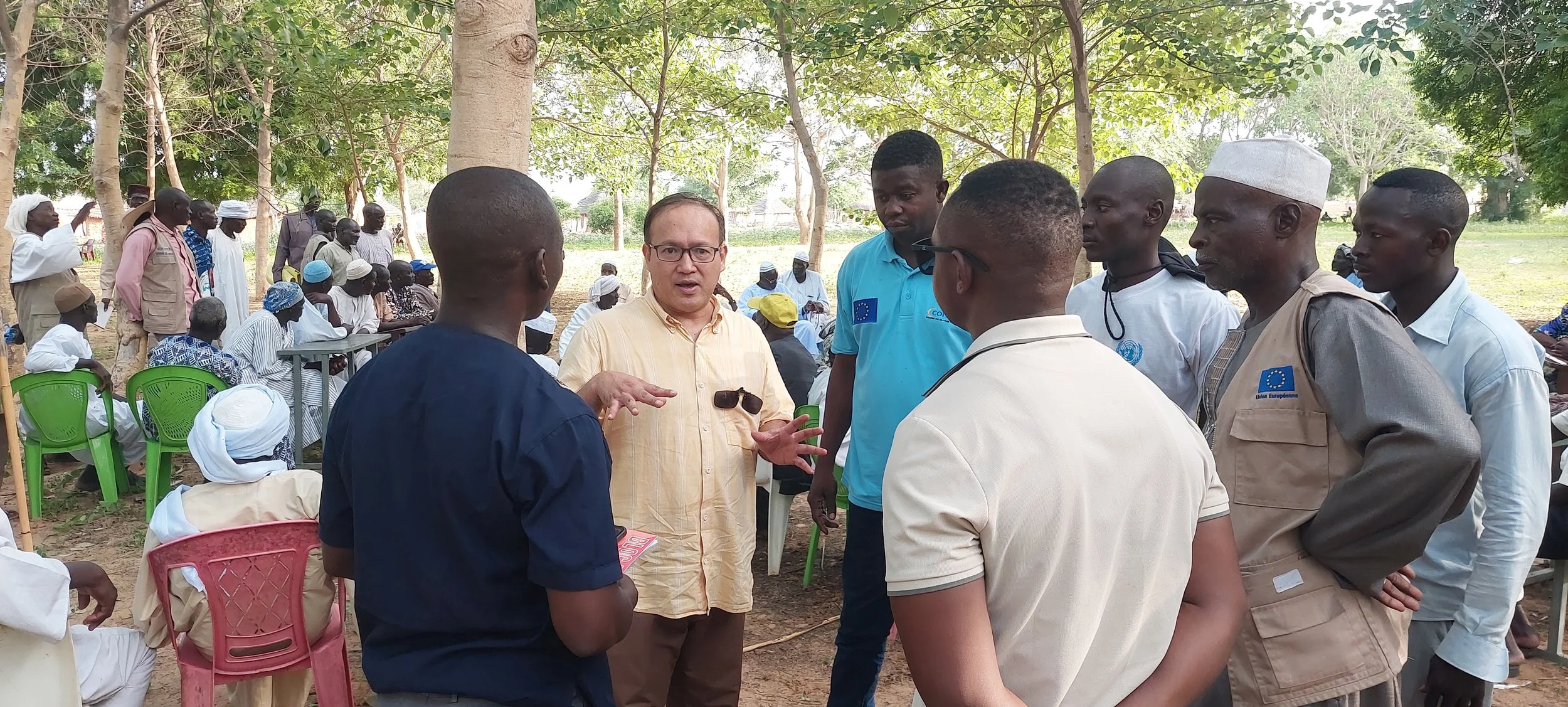
(Photo: Concordis staff from the Central African Republic and Sudan set out the organisation's vision for resolving the conflict between the border communities, in discussion with a representative of MINUSCA.)
A workshop to bring communities back around the table
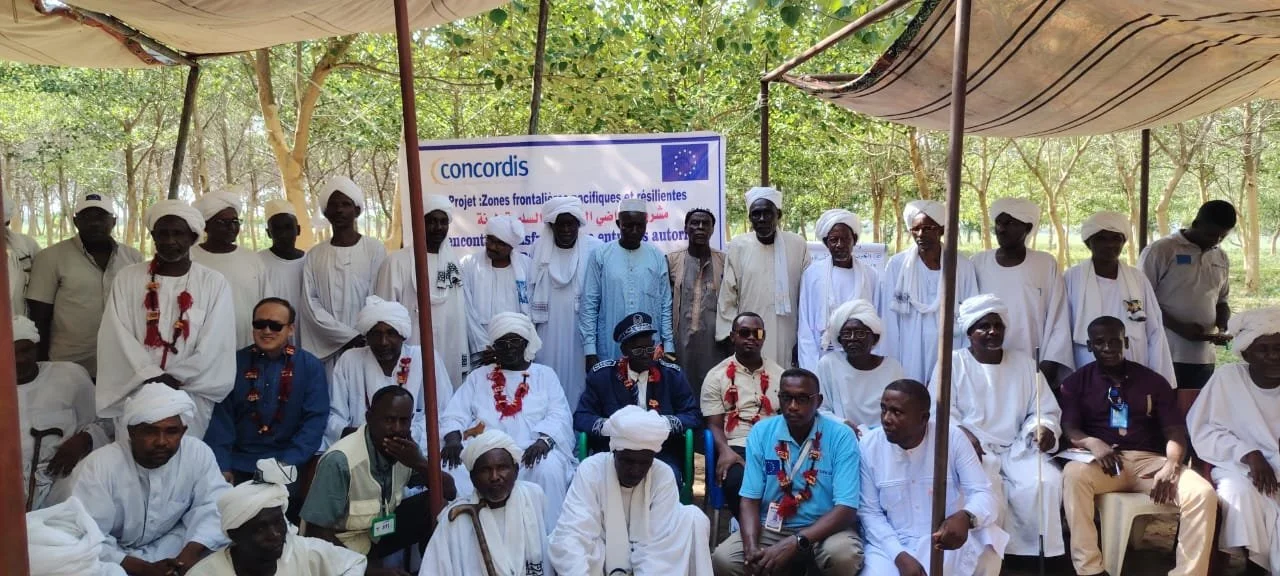
From 18 to 22 June 2026, Concordis facilitated the new dialogue workshop in Am Dafock, bringing together 67 participants from Sudan and CAR.
Around the table were traditional and native administration leaders, community elders, women and youth representatives, farmers and herders, alongside authorities and security services from CAR, a representative of MINUSCA, the Um Dukhun mediation committee, and members of the Concordis Advisory Groups from Sudan and CAR.
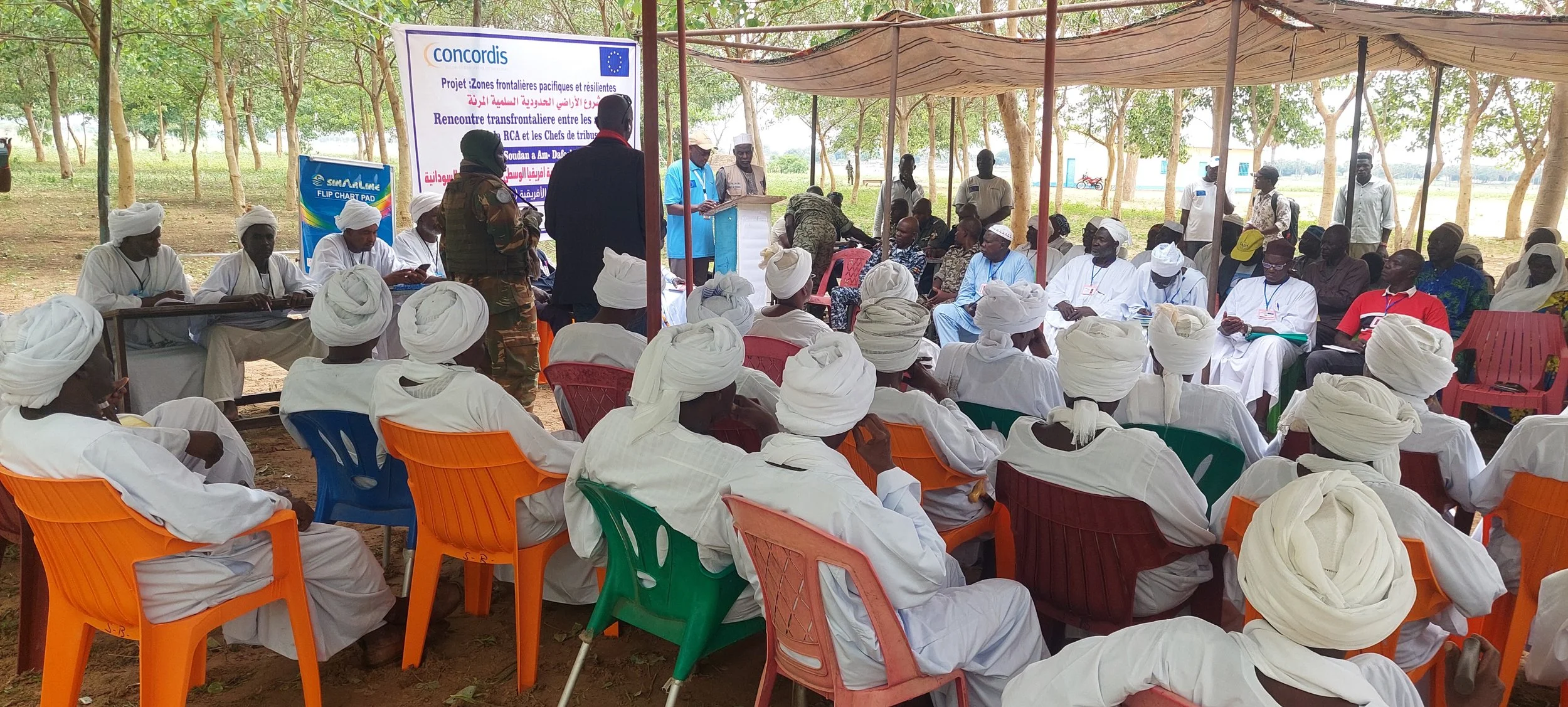
Over three days, they worked through plenary sessions, small-group discussions, and mediation.
Participants from the Sudan side represented the Taisha, Barno, Messiria, Salamat, Rezigat, Awlad Rashed, Tama, Masalit, and Fur communities, while participants from the CAR side represented the Kara, Sara, Gola, Yolo, Hawsa, and Salamat communities.
(Photo: Concordis staff deliver welcoming remarks to participants at the cross-border conference.)
The discussions were frank.
Each side set out, in its own words, the pressures it faced and the obligations.
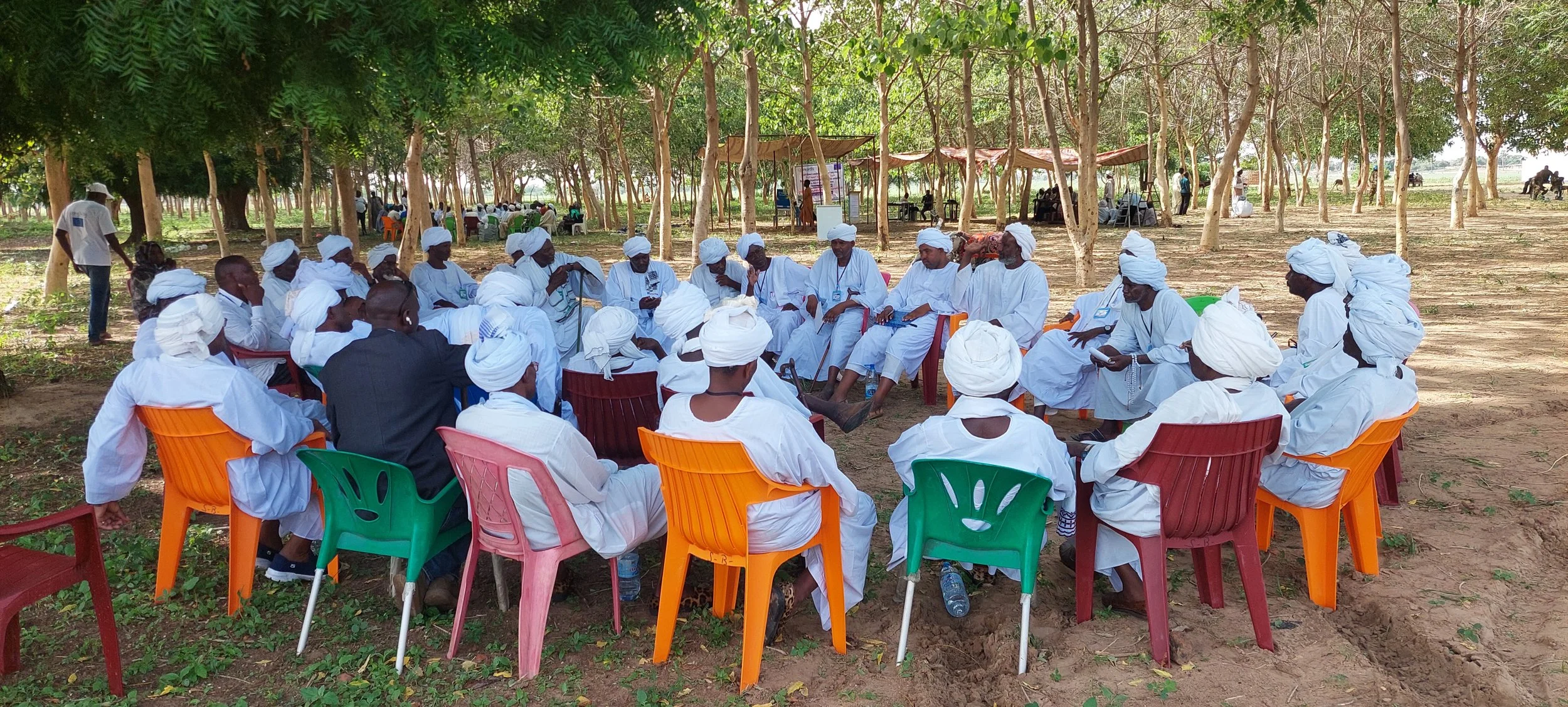
Herders spoke about unsafe passage, blocked livestock routes and difficulties accessing water and veterinary services.
Farmers raised concerns about crop damage, security and herders entering agricultural areas before the agreed grazing season.
Bringing these grievances into the open, and hearing them acknowledged across the table, was itself part of rebuilding trust.
(Photo: Representatives of the Sudanese herding communities discuss the Mediation Committee's proposals for reconciliation.)
Turning commitments into practical steps
The dialogue ended with an addendum - a formal addition to the October 2025 agreement - endorsed by both sides.
This time, the focus was on turning commitments into concrete action. The addendum set out a clear schedule for settling what was still outstanding, with payments to be made in stages over the following two months (July and August 2026).
They agreed to reopen livestock migration routes and pastoral corridors, and revive the Joint Peace and Reconciliation Committee, a shared mechanism to help resolve disputes before they escalate.
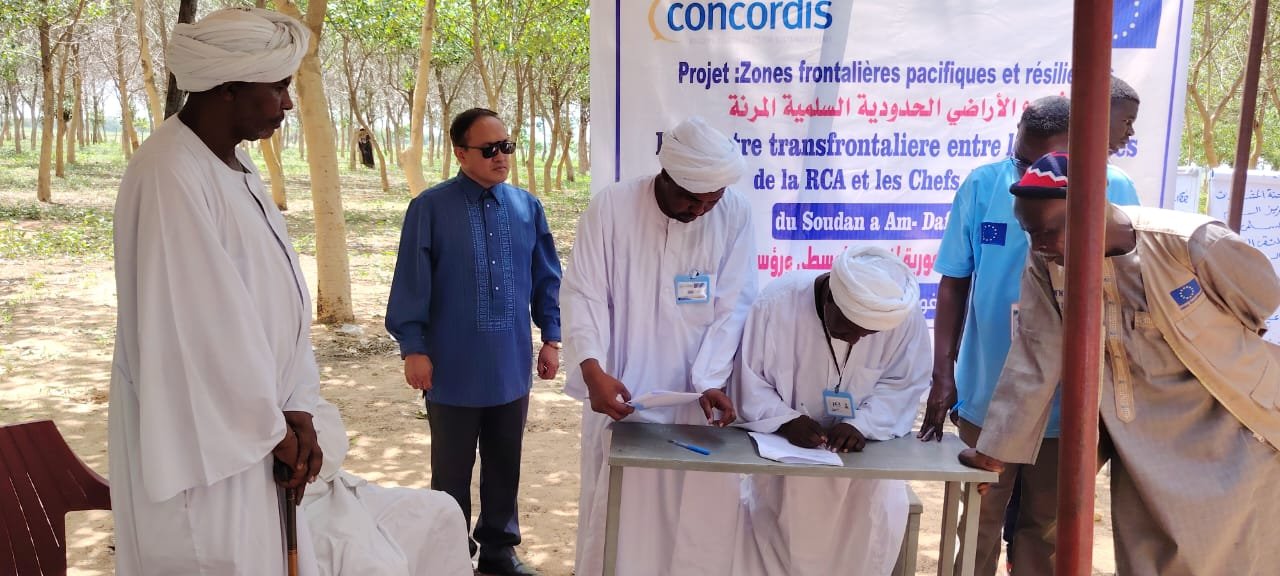
Senior traditional leaders on both sides took responsibility for overseeing implementation. To reinforce their commitment, both parties sealed the agreement with an oath.
Crucially, the outcome was framed as a set of mutual commitments rather than obligations owed by one community alone.
(Photo: Sultan Ahmed Mustafa Angabo and Omda Issa Abdulrahman Bishara, the senior traditional leaders representing the Central African and Sudanese communities respectively, sign the addendum to the peace agreement.)
Concordis facilitated a process that allowed all the participants to sign an agreement to make cross-border transhumance safer, setting out what each party would undertake.
For Sudanese herders, that meant respecting designated corridors and crossing conditions, travelling without weapons or military dress, and paying the relevant taxes and fees.
Central African farmers agreed to respect grazing zones and migration routes, stop livestock theft and bring disputes to the joint committees rather than take matters into their own hands. The authorities of both countries, in turn, committed to overseeing herders' stays and registration, safeguarding the corridors, and providing access to veterinary and social services.
Peace, in other words, was treated as a shared responsibility.
Reconciliation is possible, if everyone has a role
The workshop reminded everyone of what makes reconciliation possible along this border: the inclusive participation of both communities, the trusted role of traditional leaders and mediators, and shared mechanisms to address disputes as they arise.
It was felt that the long history of good-neighbourly relations between the two towns was a foundation worth rebuilding. There was value in dialogue which resolves disputes that inevitably arise between communities sharing the same land and resources. The engagement of women and young people, so often absent from past agreements, was widely seen as essential to making this one endure.
And the first of the commitments was honoured before the delegations left: a portion of the agreed compensation handed to the mediation committee, with the remainder to follow.
(Photo: Participants from both delegations gather for a group photograph at the close of the conference.)
Protecting the progress made
The agreement was tested almost immediately. Just days after the workshop, renewed violence broke out in Am Dafock. MINUSCA reported that, on 30 June, armed elements attacked the town and fired on one of its temporary operating bases, injuring three peacekeepers.
The impact quickly reached across the border. Regular movement and direct communication between Um Dafoug and Am Dafock were severely disrupted, and the border remained closed.
The attack was a reminder that reconciliation along this frontier will require patient follow-up and continued support to trusted local people working to protect peace in a volatile environment.
Concordis teams and Advisory Groups in Sudan and CAR are supporting the joint, cross-border committees and community dialogue mechanisms this process has established.
The road to lasting stability along this frontier is long, but the workshop showed what becomes possible when communities on both sides of the border choose dialogue over division.